Memory Maze: The Forgetting Curve
Introduction
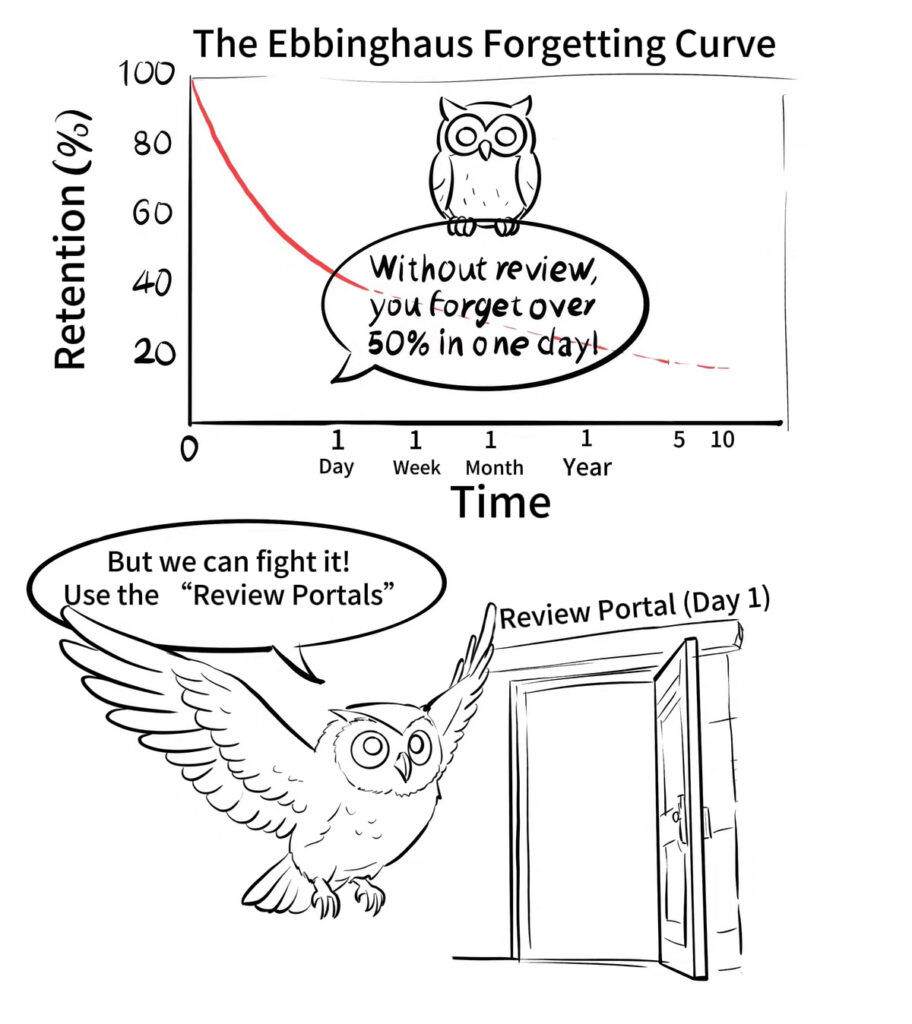
I created this educational comic to help students understand a key idea in learning science: the Ebbinghaus Forgetting Curve. Many students feel frustrated when they forget what they studied. They don’t know this is normal or that there is a simple way to fight it. My goal is to turn this abstract theory into a clear visual story. The comic shows why we forget and how to remember more by using spaced repetition. I followed a design process and will use peer feedback to make it better.
THE PROCESS
Understand (Discover, Interpret, Specify)
DESCRIBE THE CHALLENGE:
Students often quickly forget what they have learned because they do not understand how memory works or know simple strategies to prevent forgetting.
CONTEXT AND AUDIENCE:
The main audience is high school and university students. These learners need to remember a lot of information for tests and exams. They often feel frustrated when they study hard but still forget things. They want study methods that are based on science, not just guesses.
A typical user is a first-year university student with multiple exams coming up. They have limited time and often wait until the last minute to study. They cram the night before and find that most of the information is gone by the time they take the test.
Another example is an adult learning a new language. They learn new words but cannot remember them a few days later. They need a simple system to make their memory stronger.
These learners need a clear, visual explanation of why forgetting happens. They also need one simple strategy they can start using right away. The comic is designed to meet them where they are and give them something useful.
POV STATEMENT:
A stressed student needs to visually see how memory fades and learn a simple review method so that they can study with less anxiety and remember more for the long term.
LEARNING OBJECTIVES:
Main Objective:
The learner will be able to explain what the Ebbinghaus Forgetting Curve is and how it affects learning.
Sub-Objectives:
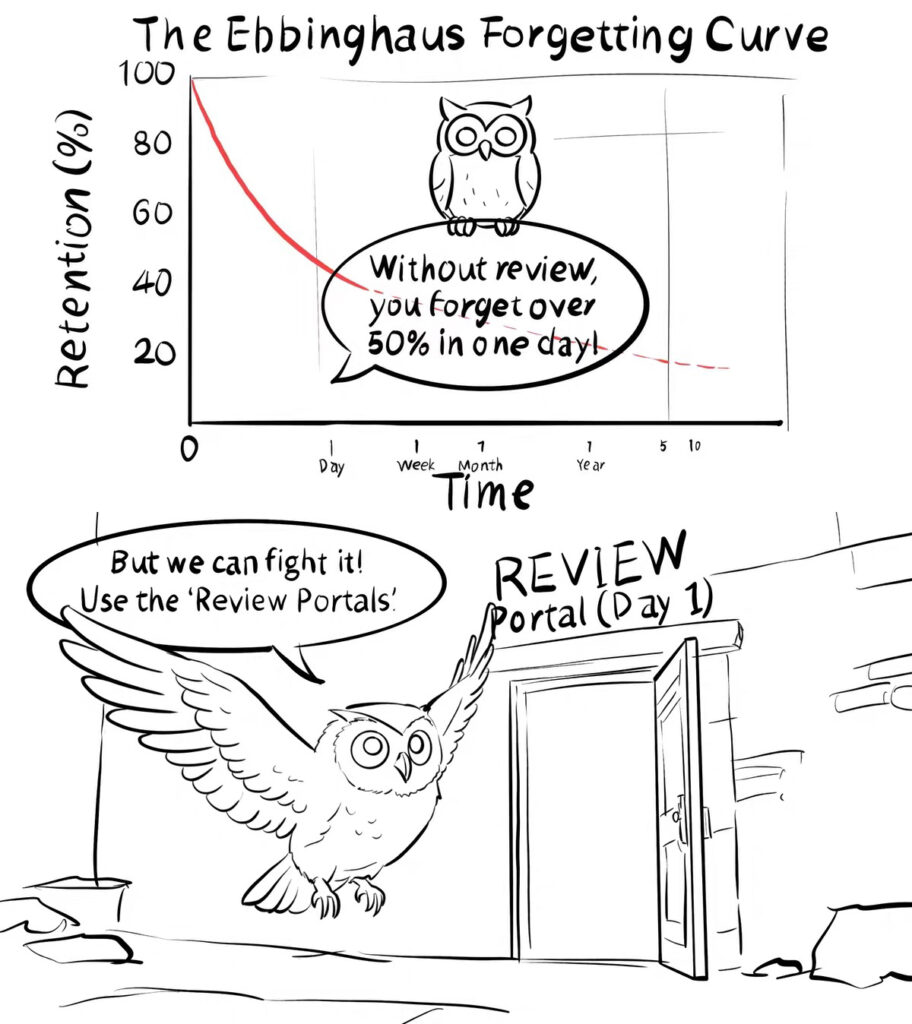
1. Describe how the amount of remembered information drops quickly over time after learning.
2. Identify “spaced repetition” as an effective way to slow down forgetting.
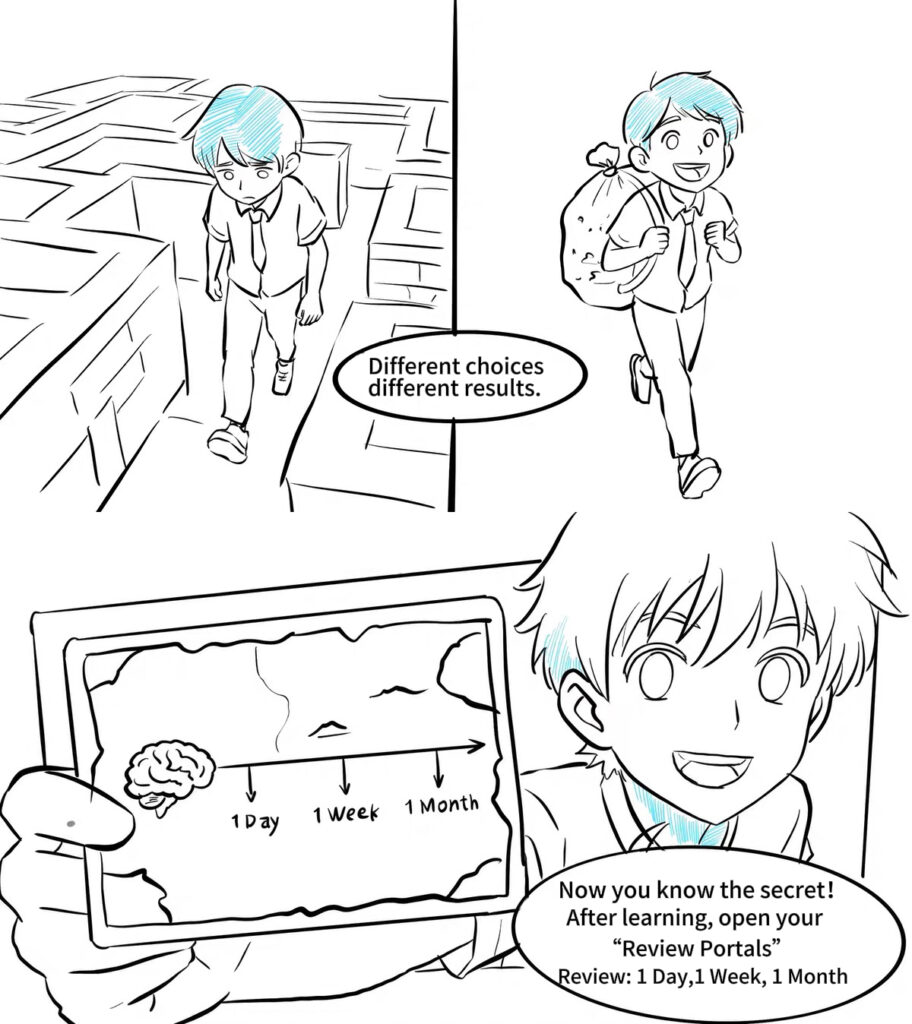
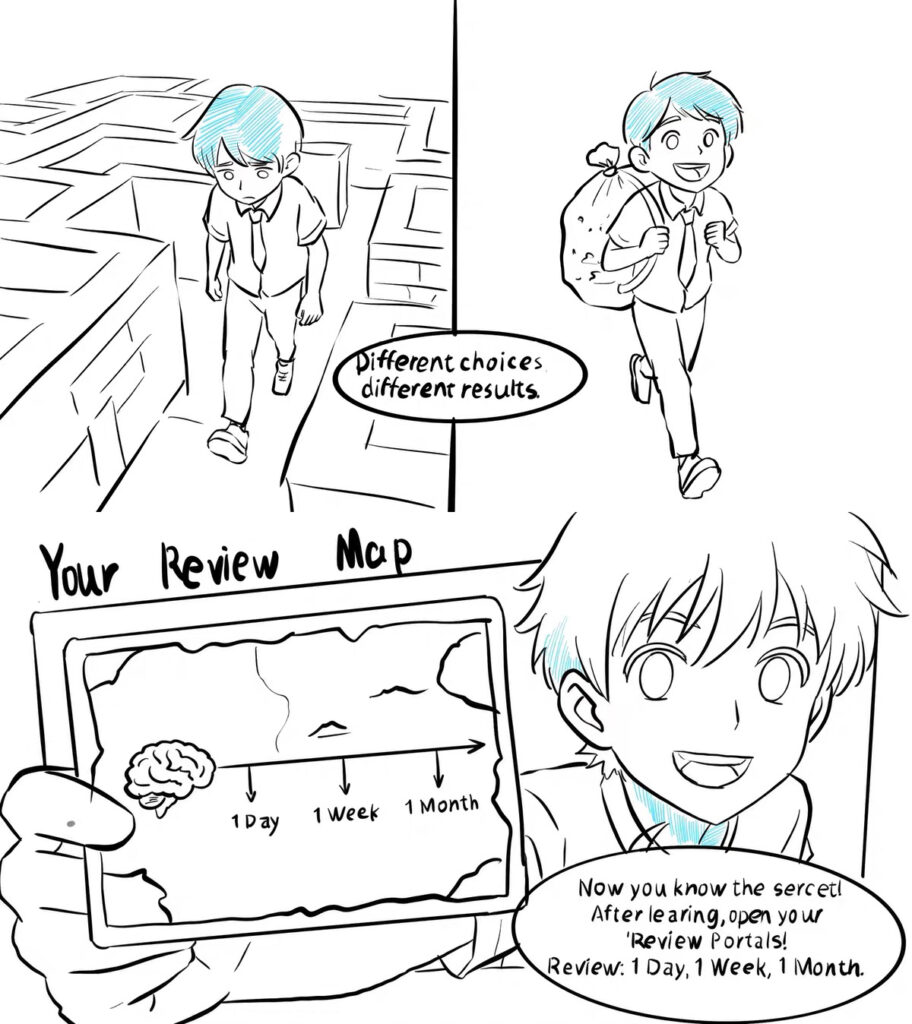
3. Apply the basic idea of spaced repetition to a simple study plan (review after 1 day, 1 week, 1 month).
Plan (Ideate, Sketch, Elaborate)
IDEATION:
I started by thinking about common problems in learning. Forgetting was the biggest one. I searched for the science behind it and found the Ebbinghaus Forgetting Curve.
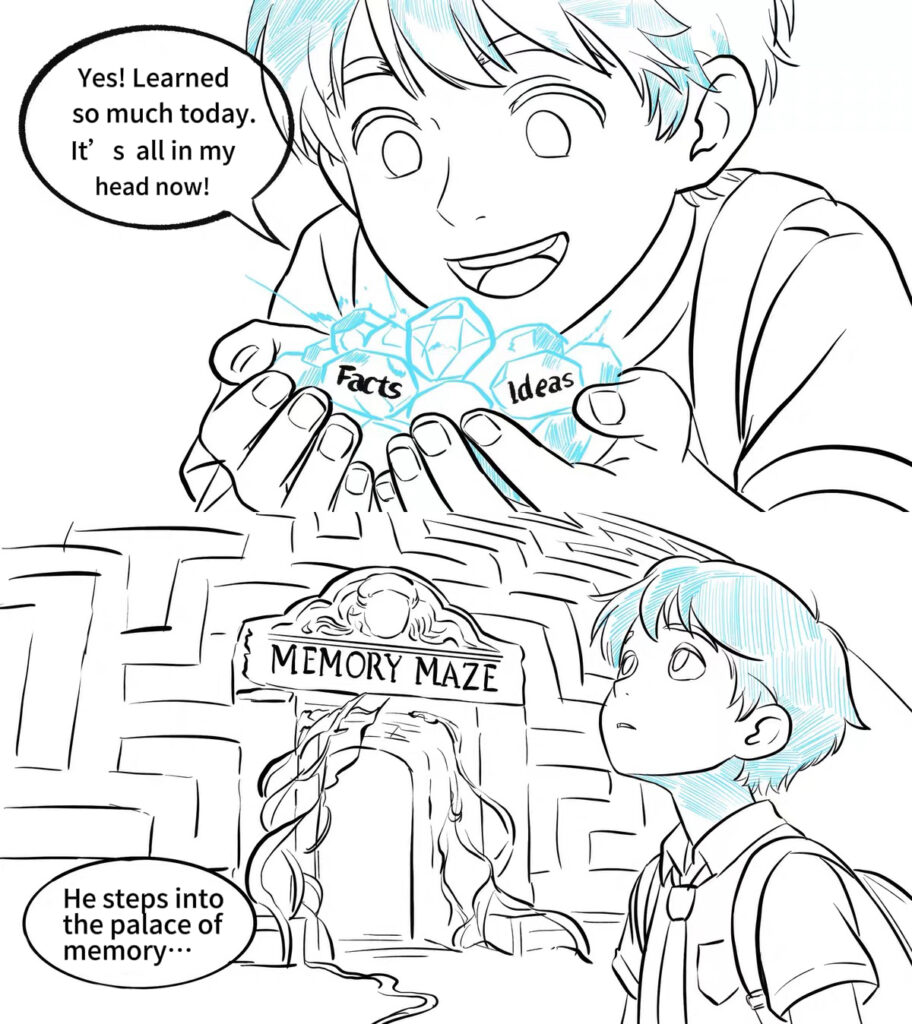
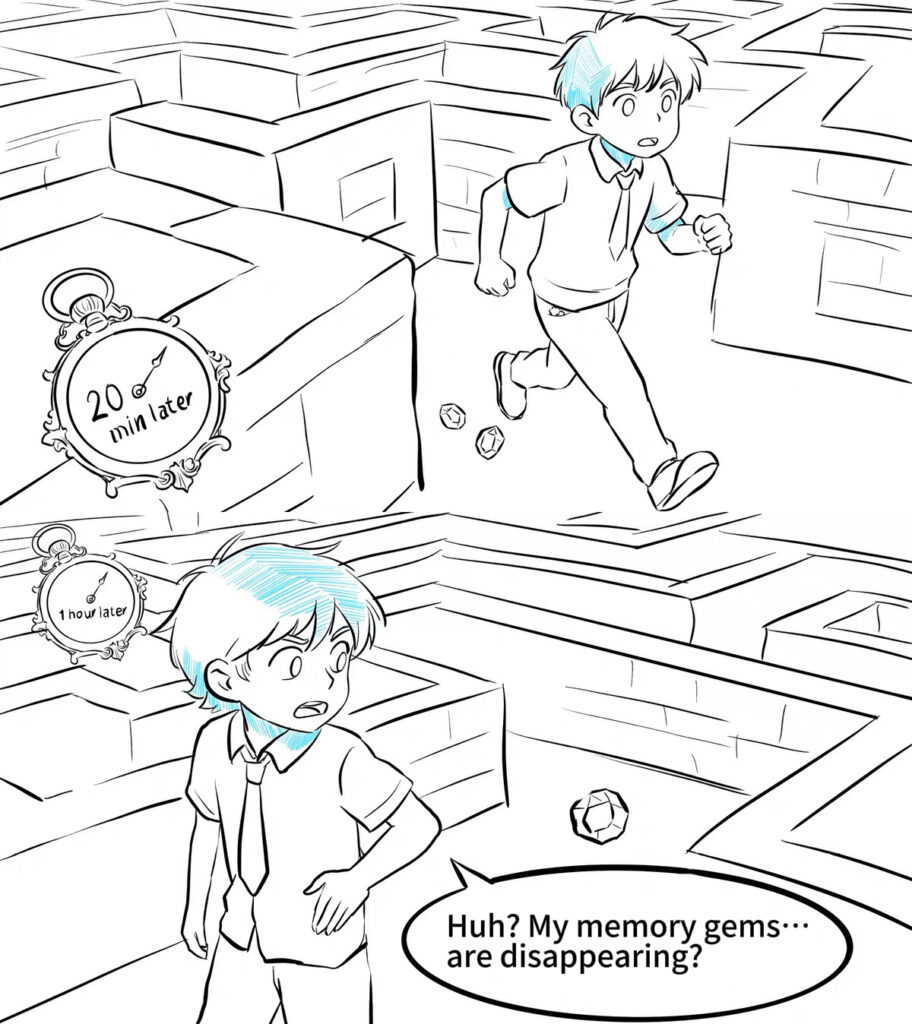
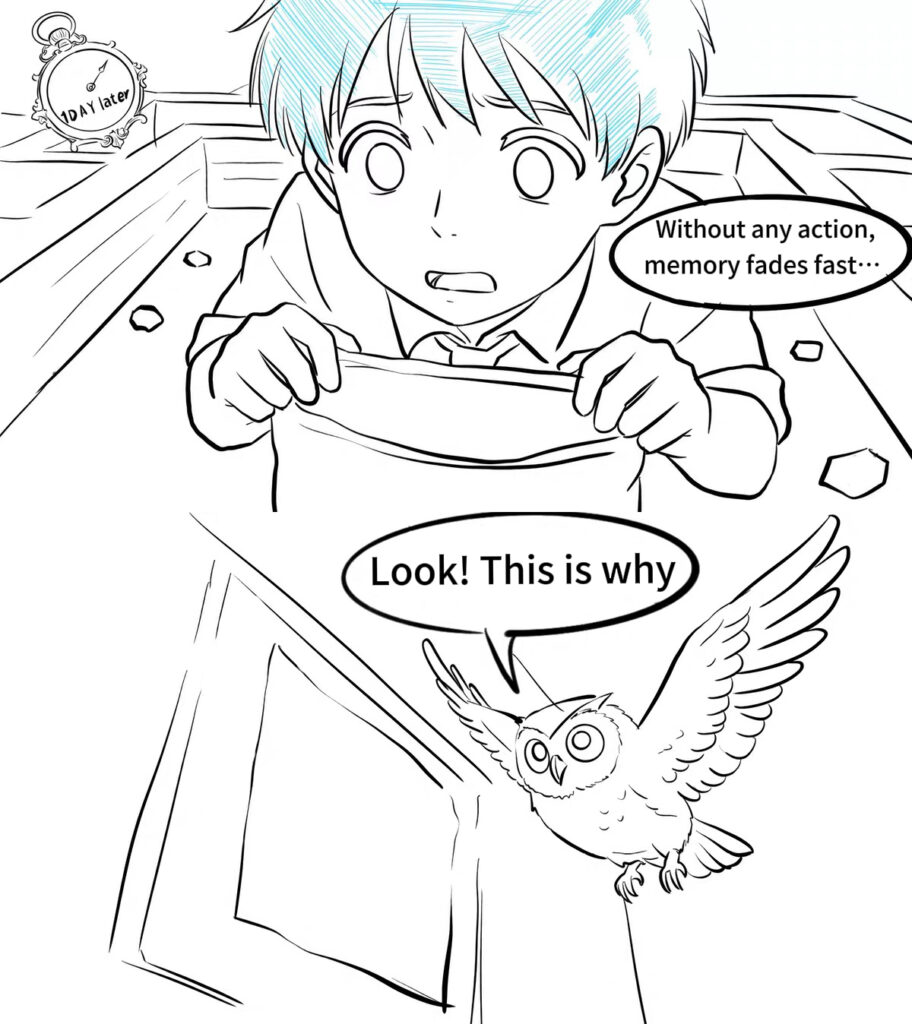
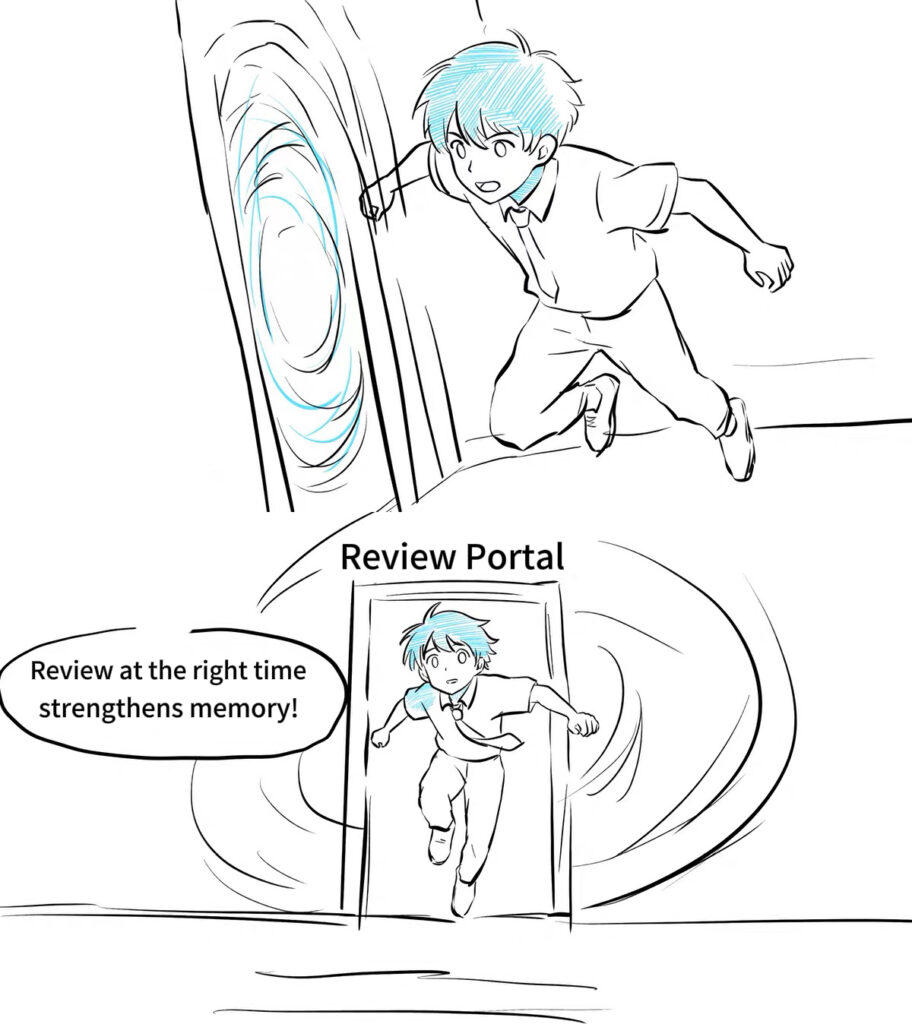
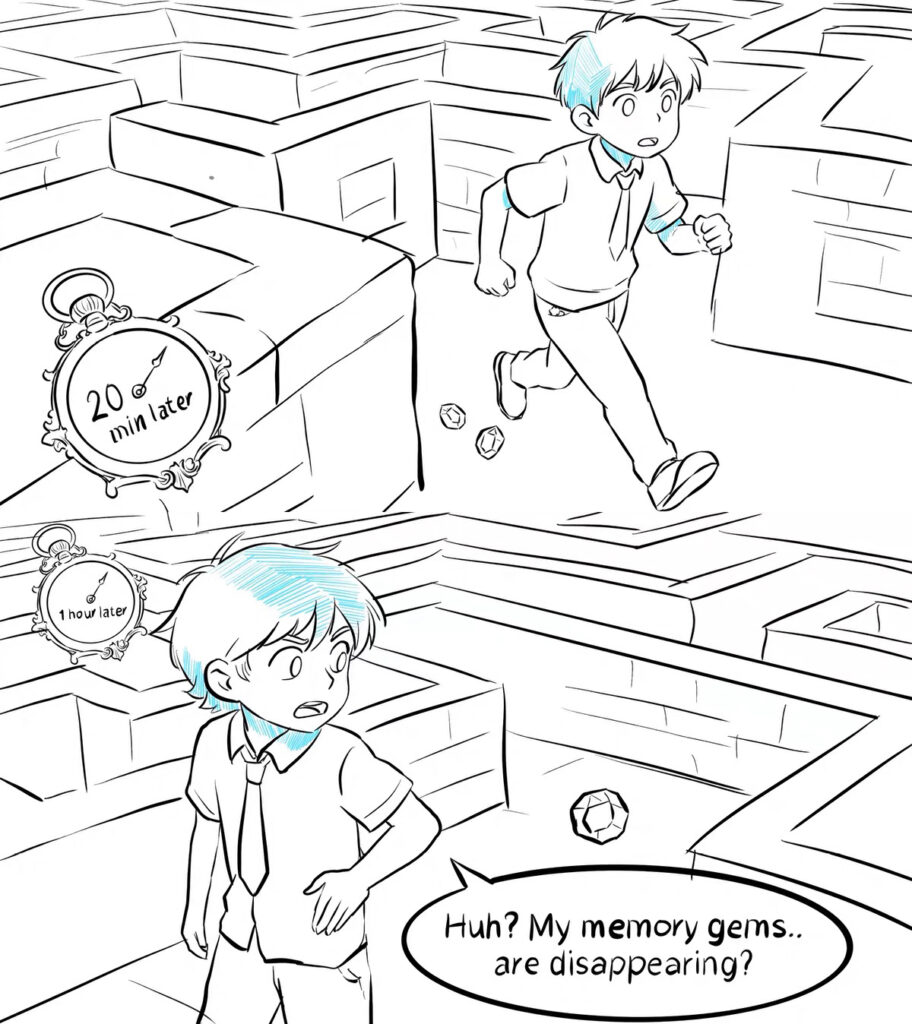
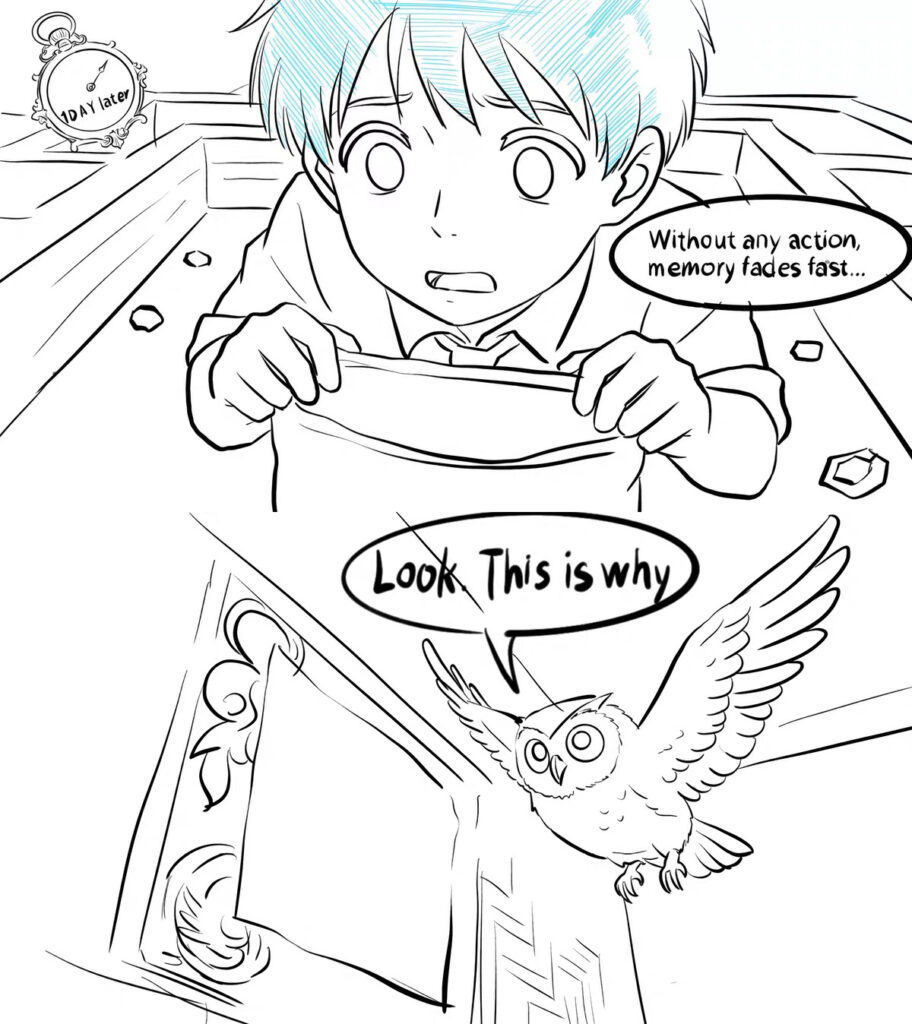
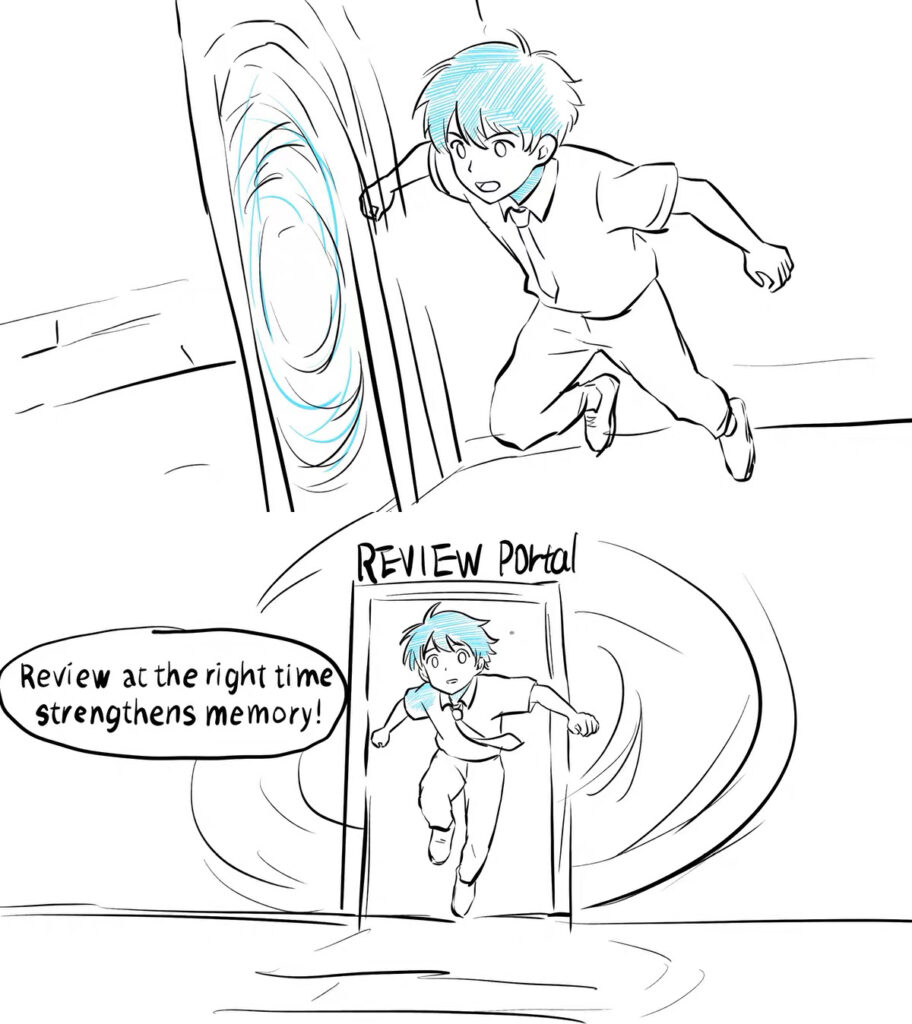
Then I asked myself: “How can I make a line on a graph feel real?” The idea of a maze came up. In a maze, you can lose your way and lose things. Memories became “gems” that you collect and can lose if you are not careful. The solution became “review portals” that let you go back and save your gems.
My most promising idea is the “Memory Maze” adventure. The hero loses memory gems and finds review portals to get them back. This turns a boring theory into a clear and interesting story.
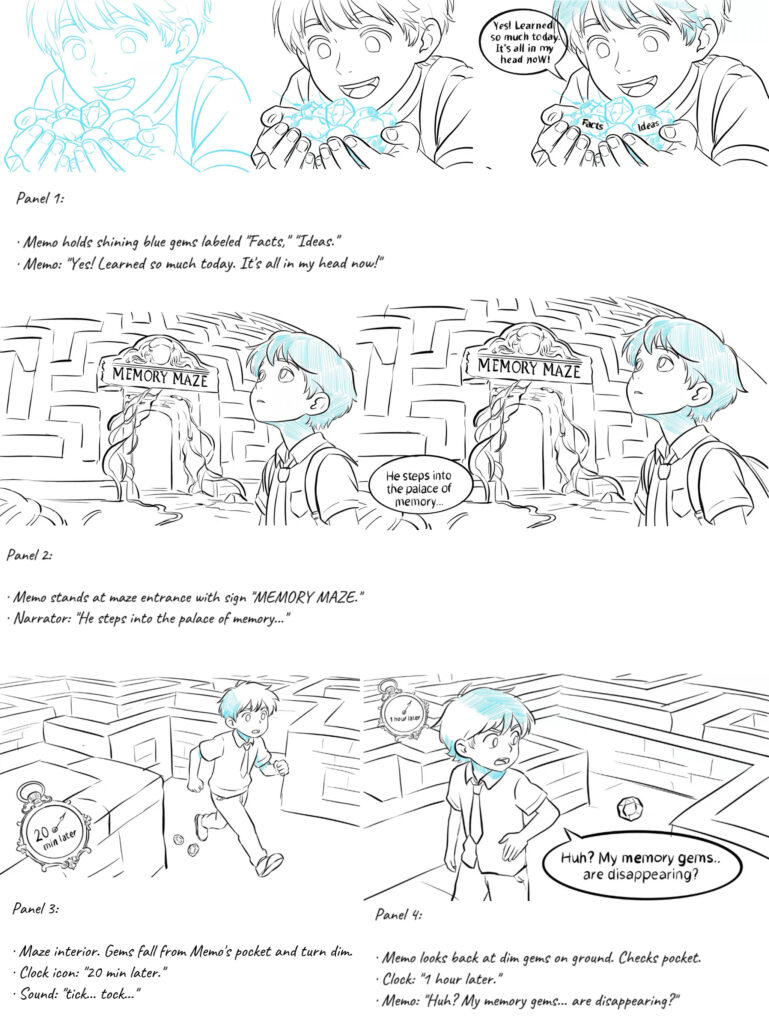
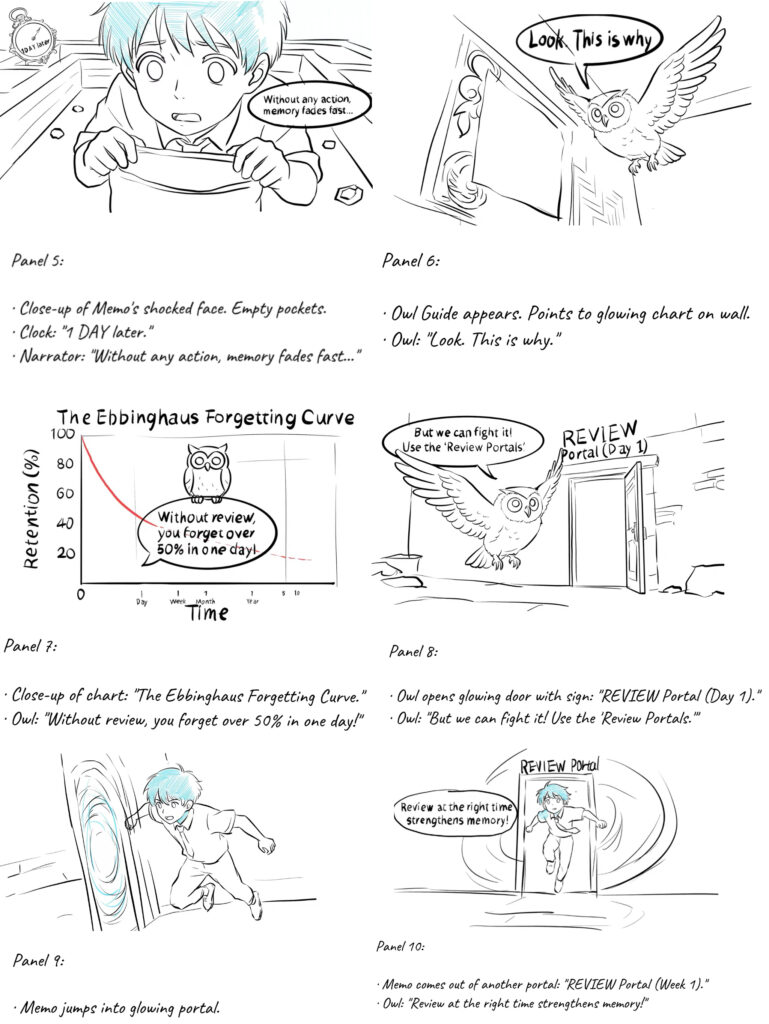
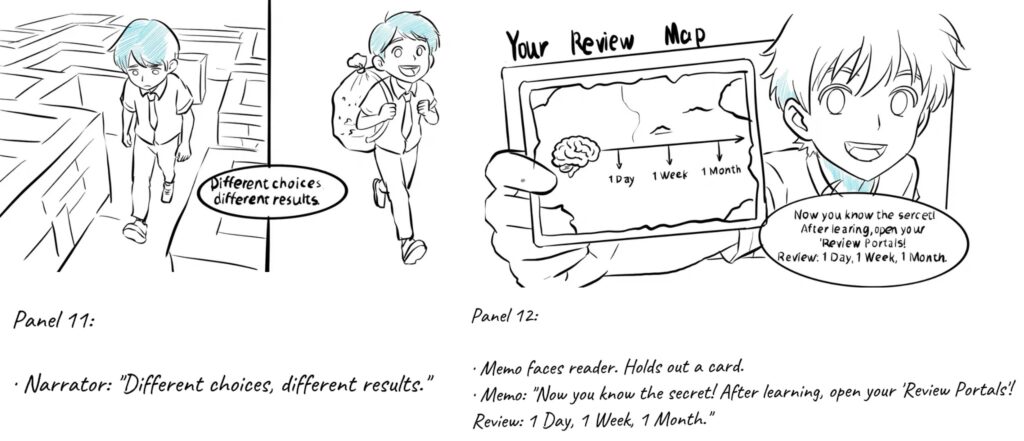
STORYBOARD OR SCRIPT:
THEORY APPLIED:
- ICAP Framework – Students move through different levels of learning. First they passively read the comic. Then they actively follow Memo’s journey and notice when gems disappear. In panel 12, they construct their own understanding by thinking about how they will use the review method. After reading, they can talk with classmates about their own forgetting experiences. This moves them into interactive learning.
- Active Learning: Storytelling – Teaching through a story helps students connect emotionally. They feel worried when Memo loses his gems and relieved when the portals work. This emotional connection makes the lesson easier to remember. Students are more likely to recall a story than a list of facts.
- Merrill’s Principles of Instruction – The comic starts with a real problem students face (forgetting). Panel 1 activates what they already know (the feeling of learning something new). Panels 3-7 show how forgetting happens and introduce the forgetting curve. Panel 11 lets students see the result of reviewing versus not reviewing. Panel 12 asks them to use the 1-7-30 method in their own life. This follows Merrill’s idea of moving from problem to activation to demonstration to application to integration.
Prototype
Peer Feedback
After receiving feedback from two peer reviewers, I organized their comments into three main themes:
Theme 1: Opening Clarity
Both reviewers noted that the purpose of the comic could be clearer at the beginning. One reviewer suggested adding “a title and subtitle embedded in the first panel to help set the learning objective.” The other reviewer emphasized the need for clearer connections between the metaphor and the learning goals, noting that “learners might not immediately understand that the gems represent memory retention and portals represent spaced reviews.”
Theme 2: Visual Cues and Labels
Both reviewers pointed out that learners might not immediately understand what the gems and portals represent. One reviewer suggested adding “headings or sentences describing the process in each panel, such as ‘learning’ and ‘forgetting’.” The other reviewer recommended making the metaphor “more visually explicit” so readers can link the gems to memory retention and portals to spaced repetition without guessing.
Theme 3: Coherence and Simplification
One reviewer raised concerns about the coherence principle, noting that “certain panels include some aspects that don’t directly support the main learning objective.” They suggested simplifying some panels and using a “simpler font” to improve accessibility and reduce visual clutter. The other reviewer did not directly comment on this, but their suggestion to add clearer labels would also contribute to a more coherent design.
Reflect and Refine
Based on the feedback I received, I made the following revisions to my comic and design documentation:
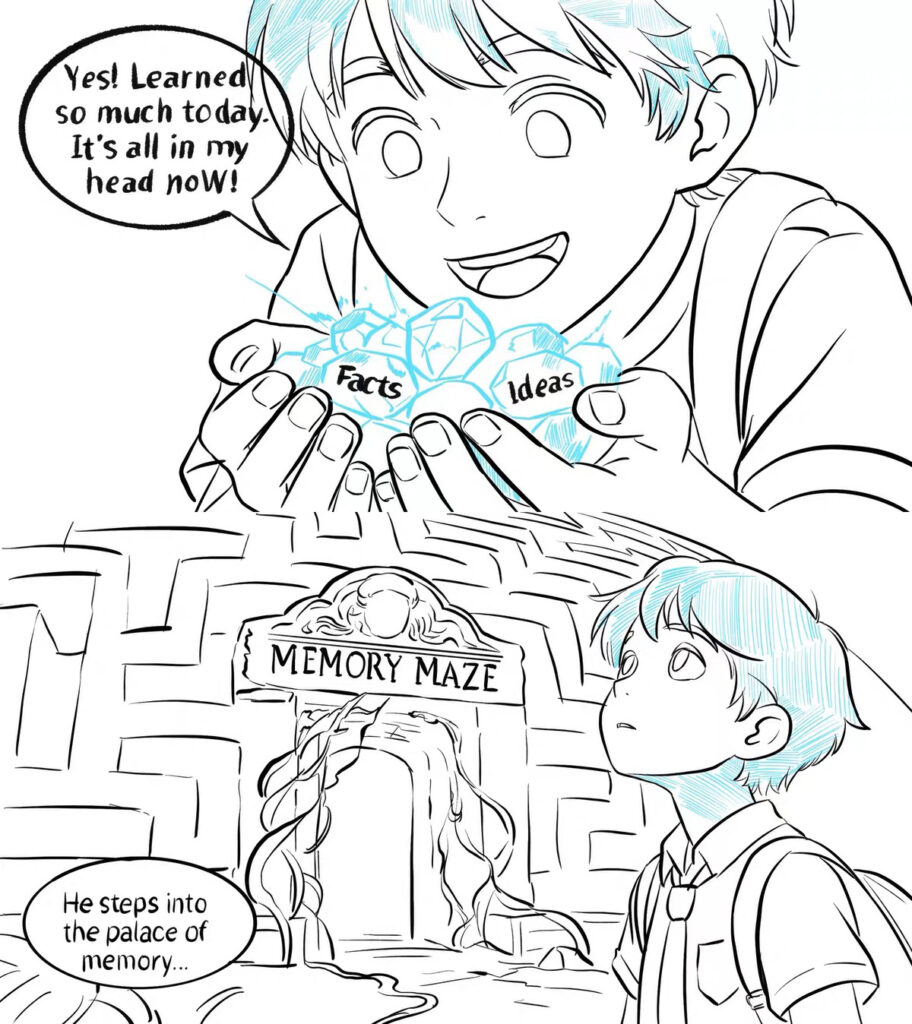
Revision 1: Added an Opening Page with Title and Introduction
I added a new first page before the comic starts. This page includes:
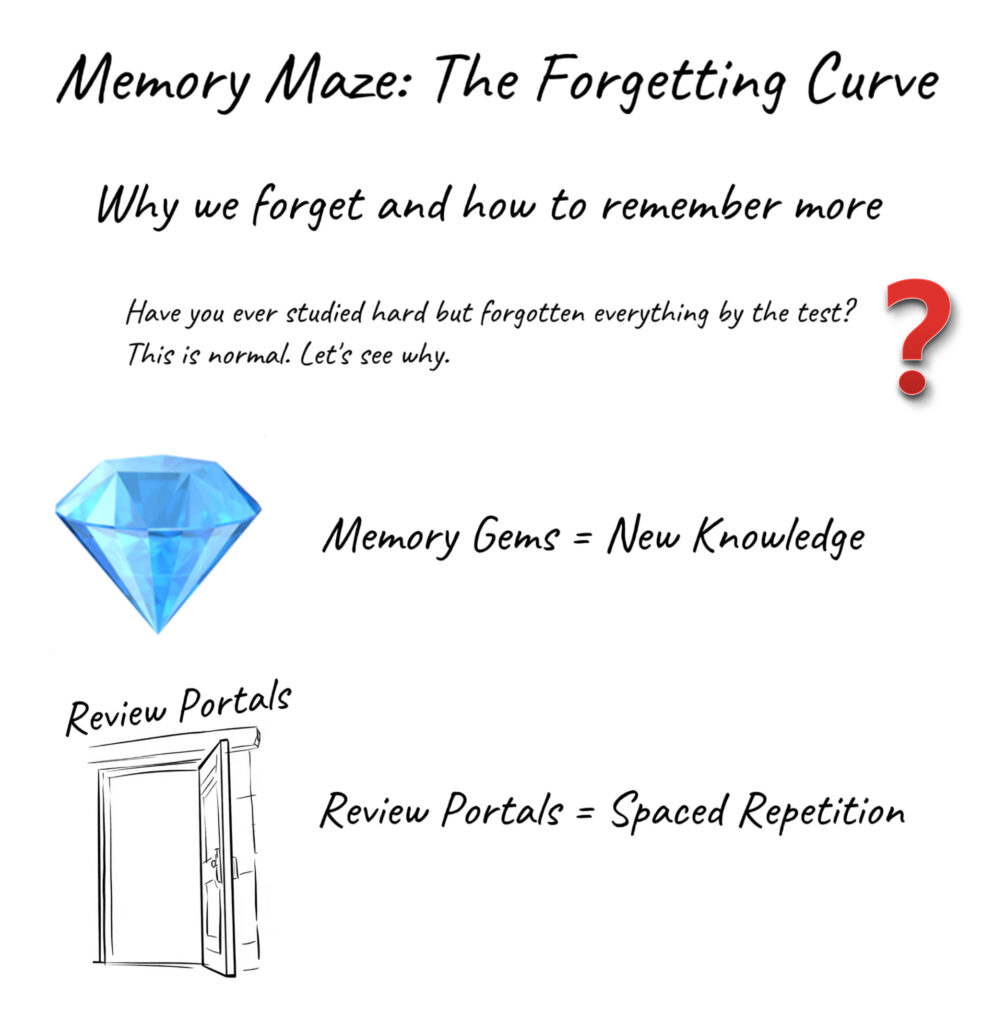
- Main title: “Memory Maze: The Forgetting Curve”
- Subtitle: “Why we forget and how to remember more”
- Introduction text: “Have you ever studied hard but forgotten everything by the test? This is normal. Let’s see why.”
This opening page immediately tells readers what the comic is about and why it matters to them. The question at the end (“Have you ever studied hard but forgotten everything?”) connects to students’ own experiences, making them curious to learn more.
Revision 2: Added Explanatory Labels for the Metaphor
To make sure readers understand what the gems and portals represent, I added small explanatory labels:
On the opening page, I added a line explaining: “Memory Gems = New Knowledge”
This simple label helps readers immediately connect the visual metaphor to the learning concept. This follows dual coding theory, as learners now process the same information through both visual (the gems) and verbal (the label) channels.
Revision 3: Changed to a Simpler Font
I changed all text in the comic to a cleaner typeface. The original font was harder to read, especially in smaller panels. The new font is clearer and more accessible for all readers.
Revision 4: Simplified Panels by Removing Unnecessary Details
I reviewed each panel and removed any visual elements that did not directly support the learning objectives. The maze background is now simpler with less decorative detail that might distract readers from the main action. The focus is now on Memo, the gems, the clocks, and the portals, everything that directly teaches the forgetting curve.
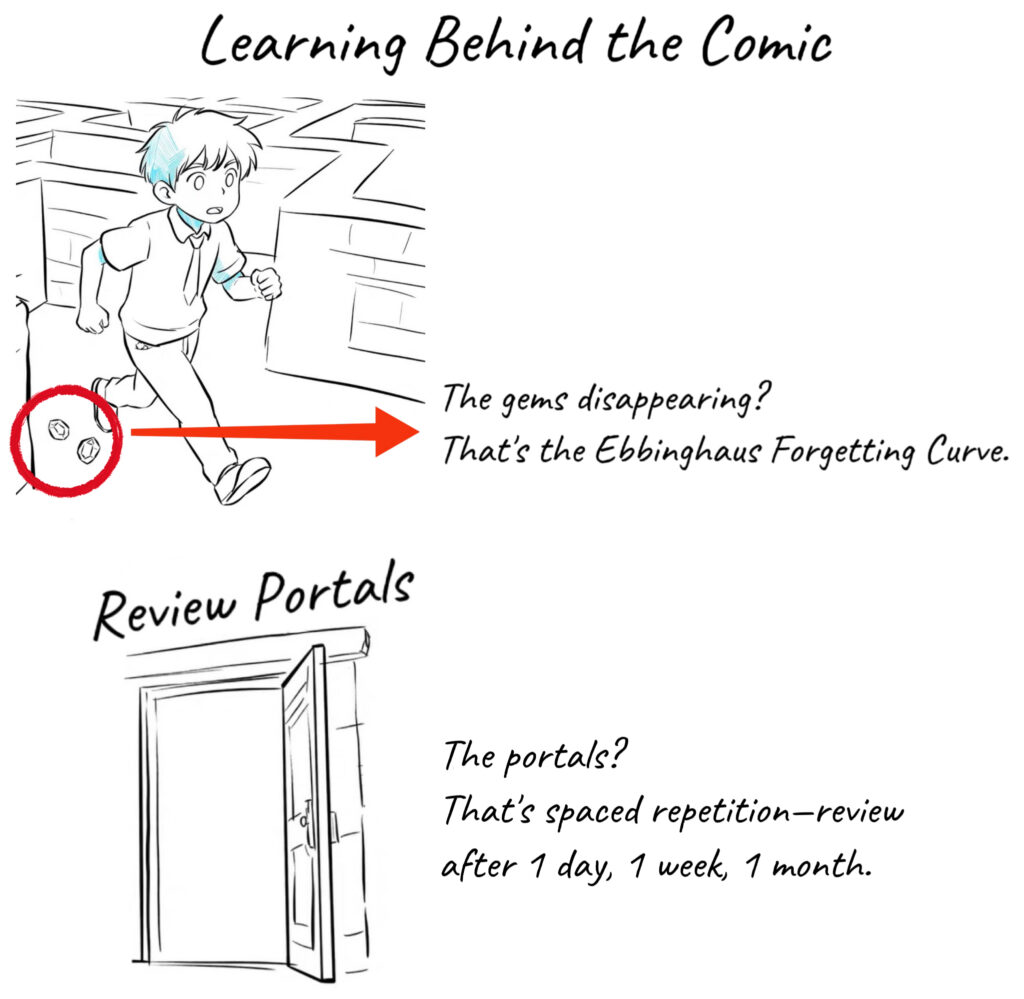
Revision 5: Added a Closing Page with “Learning Behind the Story”
I added a new final page after the comic titled “Learning Behind the Story.” This page explains the real learning theory behind the metaphor:
- “The gems disappearing? That’s the Ebbinghaus Forgetting Curve.”
- “The portals? That’s spaced repetition—review after 1 day, 1 week, 1 month.”
This page helps bridge the gap between the story and the actual educational content. Students who enjoyed the story can now clearly see what they learned. This addresses both reviewers’ concerns about making the metaphor more explicit and connects to the metacognition idea of helping students understand not just what they learned, but how they learned it.
Individual Reflections
Working on this comic project taught me a lot about the design process. The Understand phase helped me think carefully about who my audience is and what they really need. I realized that students don’t just need information about the forgetting curve; they also need to know that forgetting is normal and that there is a simple solution they can use.
The Plan phase was harder than I expected. I had to balance my creative ideas with clear learning goals.
The peer feedback was really helpful. Both reviewers noticed similar things, which showed me these were real problems, not just personal opinions. Their suggestions about adding a clear opening, explaining the metaphor, and simplifying the visuals made a big difference.
I made four main changes based on their feedback: I added an opening page with a title and introduction, added labels explaining what the gems represent, changed to a simpler font, removed unnecessary details from the panels, and added a closing page explaining the science behind the story. Each of these changes made the comic clearer and more useful for learners.
The final version is much better because of this process. The learning really happens when I get feedback, reflect on it, and make changes.
Final Artifact